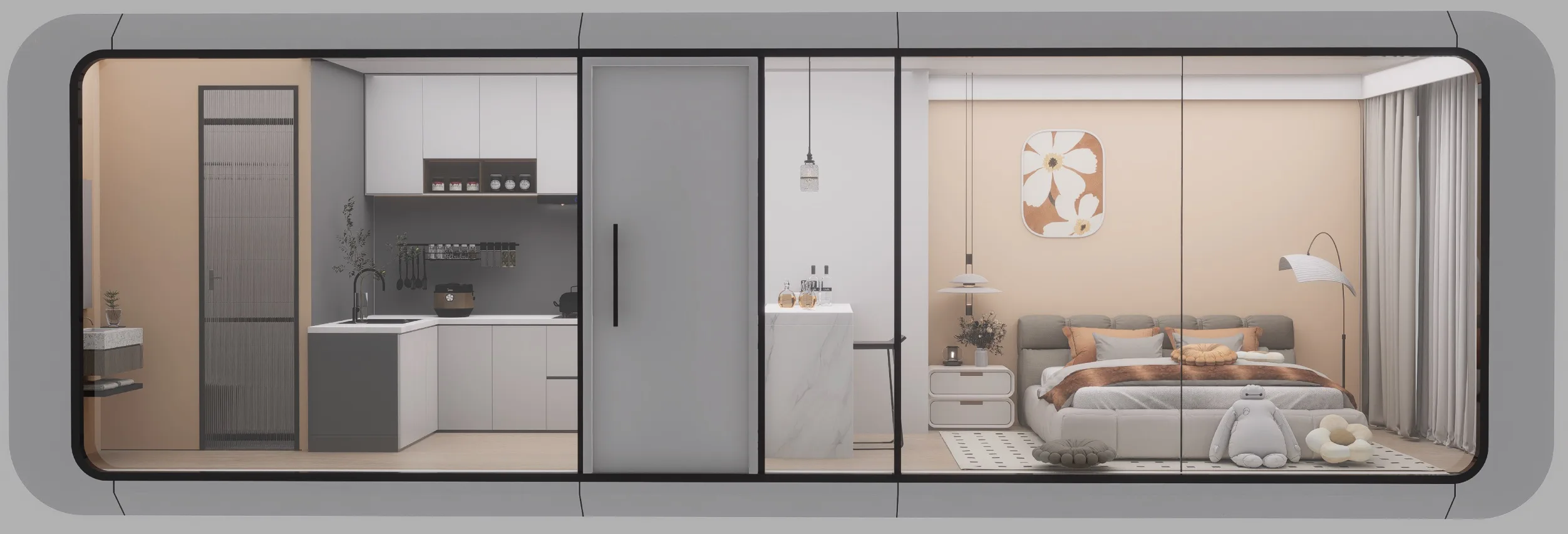
Separate the module from the full project
The module is only one part of the total budget. Buyers should also allow for delivery, lifting, foundations or supports, service connections, consultants, certificates, approvals, stairs, decks, landscaping, and any site-specific works.
Model choice changes the scope
A studio, one-bedroom, two-bedroom, and two-storey modular home can differ in size, services, fixtures, layout complexity, transport planning, and installation requirements. The cheapest module is not always the best value if it does not match the intended use.
Inclusions and finishes matter
Kitchen, bathroom, storage, glazing, heating and cooling, solar or battery options, accessibility features, deck interfaces, furnishing assumptions, and finish selections can all affect the final quote. Confirm what is included before comparing providers.
Delivery and lifting can change the budget
Distance, road access, site constraints, crane availability, overhead wires, slope, turning space, and weather can influence transport and installation costs. A clear access description helps avoid misleading early estimates.
Approvals and documentation are real costs
Depending on the site and use, buyers may need engineering, energy assessment, certification, planning advice, council documentation, survey information, or other consultant input. These should be planned as part of the project, not treated as an afterthought.
How to request a useful estimate
Provide location, intended use, preferred model, desired inclusions, photos, access notes, service connection assumptions, timing, and any approval advice. The more site context ProSpace has, the more useful the pricing discussion can be.