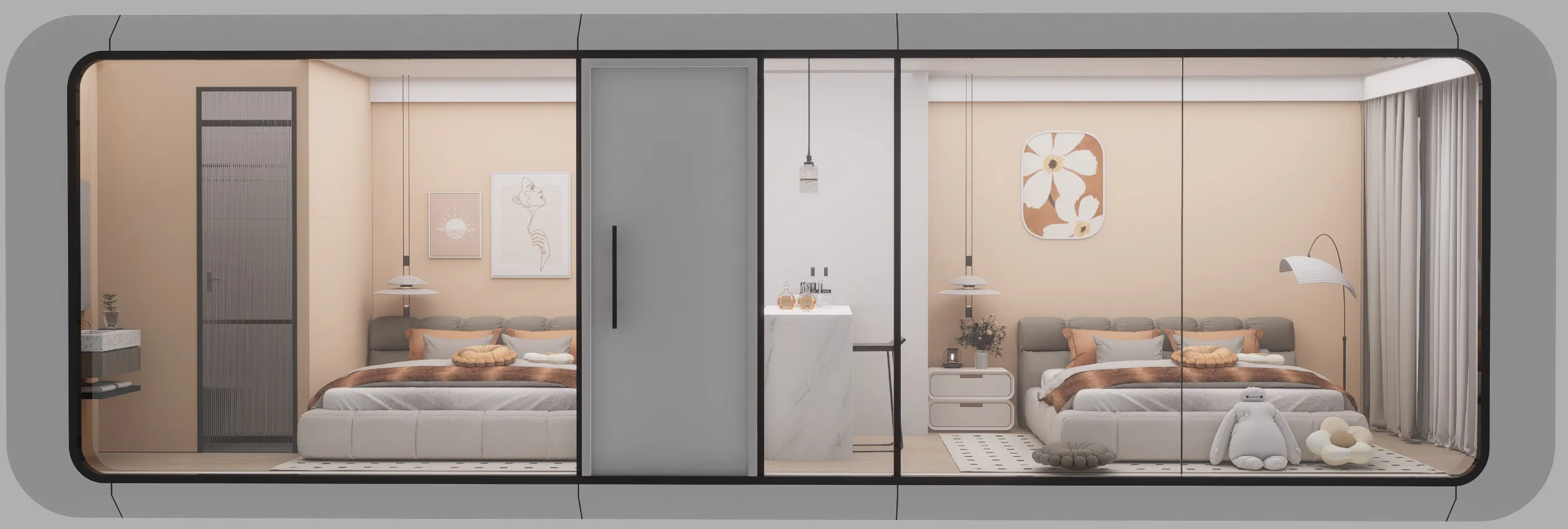
Design for the guest you want
A couple-focused retreat needs privacy, outlook, comfort, and a strong arrival experience. A family stay needs sleeping separation, storage, safe access, and durable surfaces. Worker or staff accommodation needs practical maintenance, reliable services, and simple cleaning.
One bedroom vs two bedrooms
One-bedroom layouts are efficient for couples and premium guest suites. Two-bedroom layouts can widen demand to families, friends, and longer stays, which may improve booking flexibility, but they also increase cleaning, linen, furnishing, and management requirements.
When two-storey works
A two-storey capsule can justify a premium when the site has views, outdoor deck potential, or a reason to create a memorable villa-style experience. It also needs careful review of access, engineering, stairs, privacy, and guest safety.
Plan for operations, not only photos
Short-stay performance depends on repeatable operations: parking, wayfinding, lock access, cleaning paths, linen storage, rubbish, maintenance access, Wi-Fi, climate control, noise management, privacy screening, and clear house rules. These details should be considered before finalising layout and siting.
Check local rules before projecting income
Short-stay rules can vary by council, state, strata arrangement, land use, fire safety requirement, and registration scheme. Do not assume a modular home can be used for Airbnb on every site. Confirm the approval pathway and operating rules before relying on rental income.
Operator checklist
Before requesting pricing, define target guest type, cleaning access, linen storage, parking, privacy screening, service connections, climate comfort, outdoor areas, photography angles, and whether solar or battery storage is required.